Pekka Halonen
Pekka Halonen (1865–1933) came from humble origins but was blessed with natural talents and early interest in arts mainly through the influence of his parents. After art studies in Helsinki he travelled to Paris, where he truly became part of the artistic circles of Finnish and Nordic artists. Later Halonen settled with his young family in Tuusula and built a fashionable studio home in a national romantic style. The nature, and especially the snowy winter landscapes and forests became the main source of inspiration to Halonen. He sought to capture the atmosphere and feeling of harmony in his art and a love for nature, leaving behind a profound legacy preserved today at Halosenniemi.
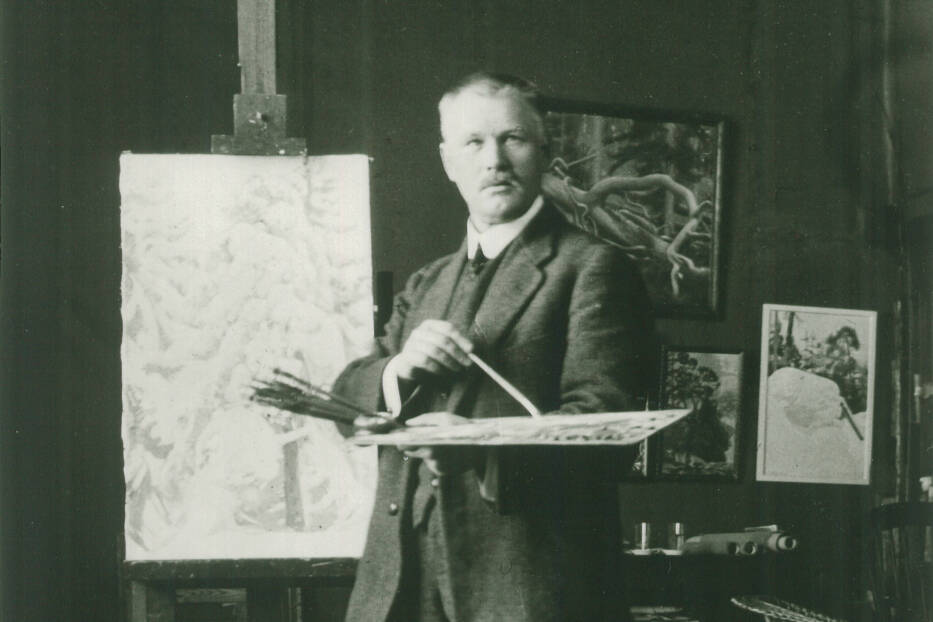
Pekka Halonen was born in a peasant and artistically talented family in Lapinlahti in Northern Savo on 23rd September 1865. Halonen’s father, Olli Halonen was endowed with artistic talents. In addition to running the farm, he worked as a decorative painter accepting commissions from churches in neighbouring districts. His mother, Wilhelmiina was deeply religious and musically gifted. She was an accomplished composer and player of the kantele. She conveyed her love for music to her children and introduced them to classic works of literature. Halonen also inherited a love and appreciation of nature from his mother.
Studies
Pekka Halonen studied first at the Finnish Art Society’s Drawing School in Helsinki for four years. He graduated with excellent grades in the spring of 1890 and received a scholarship to continue his studies abroad. Like many other Finnish artists of his generation, he set off for Paris. There Halonen studied at private art schools concentrating to his studies with great diligence. Halonen was inspired by the open air painting and realism. Back in Finland he depicted peasant people realistically in his monumental folk depictions. He showed a remarkable gift for capturing a vivid and authentic portrait of the Finnish national character.
Home in Tuusula
In 1895 Pekka Halonen married a young music student, Maija Mäkinen from Sortavala, Karelia. At early years they lived in several places in Karelia near Maija´s family and in Helsinki before settling down to peaceful and quiet Tuusula in 1898. Halonen worked with two altar painting commissions during this time.
In Tuusula Halonen found on one of his habitual skiing trips by Lake Tuusula a beautiful rocky cape which he found suitable to be his home place. The site was bought from a local farmer in spring 1899. The big trees were torn down before Halonen got the site, and this was a great disappointment for Halonen. In later years he was very protective of the nature and trees of Halosenniemi.
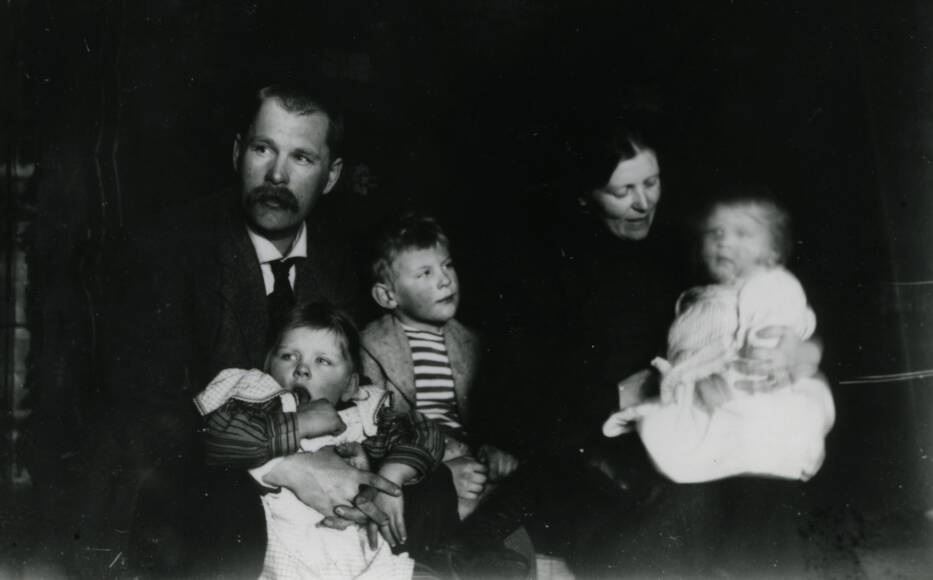
The building works started in 1901. Halosenniemi was designed by Pekka Halonen himself and he got help from his brother Antti Halonen and also some builders from Lapinlahti. The family could move in for Christmas 1901 and the house was completed in 1902.
When having his own studio, Halonen was finally able to devote himself to painting in the peace and quiet of the countryside. The were partly self-sufficient due to gardening and fishing. Halonen admired the example of author Leo Tolstoy, who had spoken for simple lifestyle and working besides peasants for ethical reasons. Through the years Pekka and Maija Halonen’s family grew and the family lived modestly and happily in Tuusula. They had eight children, four sons and four daughters. Maija was a very hard working and skilled woman. She sew clothes, tended vegetable garden and taught younger children. She also made literary works translating literature from Italian, Norwegian, Swedish and German into Finnish.
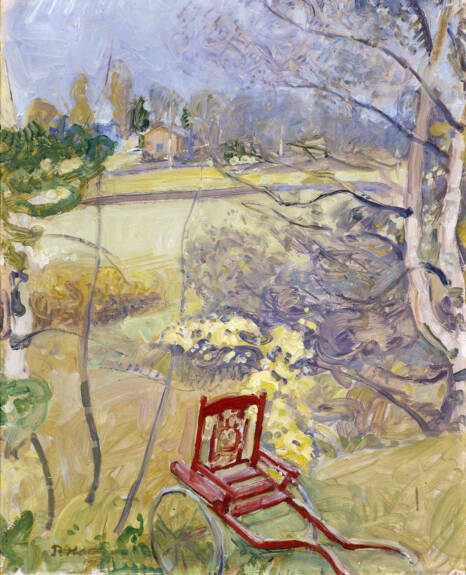
For Pekka Halonen the views and milieu of Halosenniemi became an inexhaustible source of inspiration for his art. Many of his paintings depict simple scenes from his everyday surroundings, like family members reading in the library corner or playing the piano. He has depicted the the sauna shore and the garden during different seasons. Halonen depicted also certain pine or snowy trees on the rocks or the melting of ice in the lake in spring. His winter landscapes are the most popular and he is really the master as painter of snow. In Tuusula Halonen had a wide circle of artist friends and relatives which provided him with a daily source of social and cultural stimulation. The home concerts included Halonen´s younger brother Heikki playing the violin, and some times also Jean Sibelius played the piano.
Halonen’s appreciation of nature
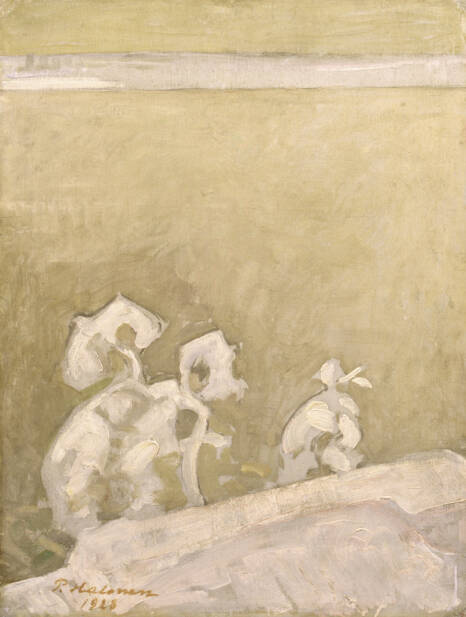
In an interview published in Svenska Pressen 1932 Pekka Halonen sums up his ideas of art: “Art should not jar the nerves like sandpaper – it should produce a feeling of peace. Ever since I was a young boy, I have been unable to see it any other way. I have never painted for anyone but myself. Searching for peace and harmony through my art has become part of my religion, so to speak. Nature is my inspiration. For over 30 years, I have lived in the same place, surrounded by woodlands. I often feel as if I have the whole Louvre and the world´s most precious art treasures right here on my doorstep. I need but step into the forest to see the most wonderful works of art ever created – and I ask for nothing else. My paintings are not naturalistic, even though I do my best to portray nature as faithfully as I can. Nature is the skeleton, but the flesh of the painting is its atmosphere – the mood is everything. Whether it comes from inside or outside me, I cannot tell. I don´t waste time thinking about problems – I just go out, and one fine day I might find what I am looking for, and then I simply must capture it on canvas.”
Pekka Halonen died on the 1st of December in 1933 in Halosenniemi. He is buried by the Tuusula church in the old Tuusula cemetery. Gravestone depicting swans was made by his cousin, sculptor Emil Halonen. Maija Halonen died in 1944. In 1949 the house was sold to Tuusula municipality on the condition that it was to become a museum.